
1. Introduction
Building and industrial electrical systems face huge fire risks every year. Cable combustion and circuit failure is one of the main causes of fire spread and property loss.
Fire resistant cable becomes a critical safety component in modern electrical design. It keeps circuit integrity under high-temperature flame exposure. It supports emergency power supply and signal transmission during fire accidents.
Many users mix up fire resistant cable and flame retardant cable. The two products have different working principles and performance limits. Correct selection directly affects building fire safety compliance.
2. Core Definition of Fire Resistant Cable
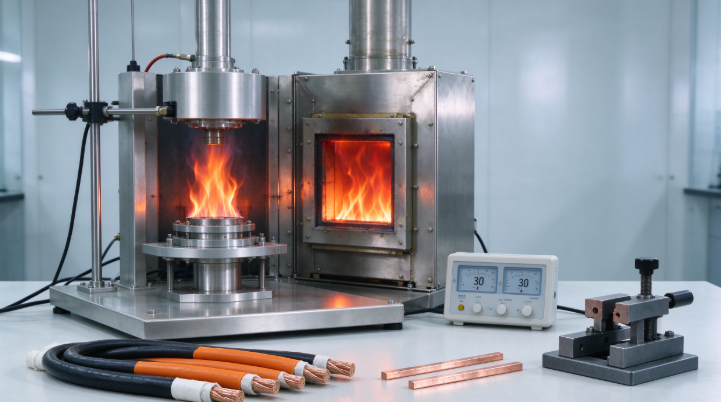
Fire resistant cable is a special wire and cable product. It can maintain normal power and signal transmission for a specified time under continuous flame burning and high temperature.
It relies on internal fire-resistant structural layers instead of only self-extinguishing performance. Most qualified products can work stably for 30 to 120 minutes in fire environments.
This core capability is called circuit integrity. It is the biggest difference from ordinary flame retardant cables.
3. Key Structural and Material Features
3.1 Mica Tape Fire-Resistant Layer
Most conventional fire resistant cables use mica tape wrapping structure. Mica tape has excellent high-temperature resistance.
It forms a dense protective layer after heating. The layer blocks flame and heat from damaging internal conductors. It avoids rapid circuit breakdown.
3.2 LSZH Outer Sheath
Low Smoke Zero Halogen (LSZH) material is the mainstream sheath choice for fire resistant cable.
It releases almost no toxic halogen gas during combustion. It produces far less smoke than PVC materials. It improves visibility for evacuation in fire scenes.
3.3 High-Purity Copper Conductor
Fire resistant cable adopts annealed plain copper conductor. The material keeps stable conductivity at high temperature. It reduces oxidation failure risks in long-term fire exposure.
4. Global Fire Resistant Cable Industry Standards
Different regions have independent certification and test standards for fire resistant cable. These standards define test temperature, burning time and mechanical shock requirements.
Below are the most widely used global standards in construction and industrial projects.
l IEC 60331: International general standard. Test condition is 830°C high temperature for 90 minutes, with mechanical shock simulation.
l BS EN 50200: European building standard. It divides grades into PH30, PH60 and PH120 based on effective fire-resistant duration.
l UL 1424: North American fire-resistant cable standard, mainly used for fire alarm and emergency circuit systems.
l GB/T 19666: Chinese national standard, widely adopted in domestic construction and public infrastructure projects.
5. Performance Comparison of Common Fire Safety Cables
Many buyers cannot distinguish fire resistant cable, flame retardant cable and mineral insulated cable. The following table shows clear performance and parameter differences.
Cable Type | Circuit Integrity in Fire | Effective Fire Time | Smoke & Toxic Gas | Cost Level |
Fire Resistant Cable (Mica Tape Type) | Specified | 90–120 min | Low smoke, zero halogen (optional) | Medium |
Flame Retardant Cable | Not specified | Self-extinguish only | Ordinary smoke output | Low |
Mineral Insulated Fire Cable | High | Over 180 min | Almost no smoke | High |
Data shows flame retardant cable only stops flame spread. It cannot keep circuit running in continuous fire.
Fire resistant cable balances safety and cost. It is the most cost-effective choice for most civil and industrial buildings.
6. Main Application Scenarios
Fire resistant cable is mandatory in key safety-related circuits. It ensures emergency systems work normally during fire disasters.
6.1 High-Rise Buildings
High-rise structures have dense personnel and complex fire spread paths.
Fire resistant cable applies to elevator emergency power, fire alarm circuits and smoke exhaust equipment power supply.
6.2 Public Infrastructure
Subway stations, hospitals, shopping malls and airport terminals require large-scale fire-resistant wiring.
These places need stable power supply for lighting, monitoring and fire fighting systems in fire emergencies.
6.3 Industrial Plants
Chemical, power and manufacturing factories have high fire hazards.
Fire resistant cable protects production control circuits and emergency shutdown systems. It reduces accident expansion risks.
7. Frequently Asked Questions
Q1: Is fire resistant cable the same as flame retardant cable?
No. Flame retardant cable only prevents flame spreading and self-extinguishes. Fire resistant cable maintains circuit integrity under long-time flame burning. The two have different core functions and test standards.
Q2: What is the standard fire resistance time for common fire resistant cable?
Most mainstream products meet IEC 60331 standard. They can keep stable operation for 90 minutes under 830°C flame with mechanical shock.
Q3: Does fire resistant cable must use LSZH sheath?
Not mandatory in all scenarios. But LSZH fire resistant cable is required in closed public spaces. It avoids toxic gas harming trapped people during fires.
Q4: What scenarios need mineral insulated fire cable instead of ordinary fire resistant cable?
Ultra-high temperature environments, long-time fire endurance requirements and core fire-fighting circuits need mineral insulated cables. It provides longer fire resistance time and higher stability.